The Kenneth and Paula Munson Family Fund for Student Support in Health Sciences Fellowships
Through the UConn Foundation and the Institute for Systems Genomics, four fellowships will be granted to support graduate students in the amount of $3,500.
To be eligible for the fellowship(s), candidates must meet the following criteria:
- Be a graduate student enrolled full-time in the University who has not received a doctoral degree from any university
- Demonstrate academic achievement
- Demonstrate financial need
- Be a participant in a University approved research project under the advisement of a faculty member who is affiliated with the Institute.
From those candidates that meet the criteria above, priority consideration will be given to students who demonstrate a commitment to conducting research related to new treatments and cures for human diseases including, without limitation, degenerative diseases, neurodevelopmental disorders and neurocognitive disorders, cancer, diabetes, autism, dementia and heart disease.
Nominations should include a one-page letter of recommendation addressing selection criteria, graduate transcript and a short CV, submitted electronically as a single pdf file to Jessica Williamson at Jessica.Williamson@uconn.edu by May 14, 2021.*
The Linda D. Strausbaugh Fellowship in Genetics and Genomics
Through the UConn Foundation and the Institute for Systems Genomics, two fellowships will be granted to support graduate students in the amount of $500.
To be eligible for the fellowship(s), candidates must meet the following criteria:
- Be a M.S. or Ph.D. student in their second year of study or beyond
- Demonstrate academic achievement
- Demonstrate financial need
- Is a citizen or lawful permanent resident of the U.S.
- Is conducting research in the field of genetics and/or genomics of eukaryotes in the lab of a PI formally affiliated with the Institute for Systems Genomics.
From those candidates that meet the criteria above, priority consideration will be given to first generation college or graduate students, and while each candidate will receive individual consideration, to students who: (1) have overcome obstacles such as socioeconomic or educational disadvantage; or (2) are members of groups that are underrepresented at the University of Connecticut; or (3) have experience living or working in diverse environments.
Nominations should include a one-page letter of recommendation addressing selection criteria, graduate transcript and a short CV, submitted electronically as a single pdf file to Jessica Williamson at Jessica.Williamson@uconn.edu by May 14, 2021.
****Selected candidates for these Fellowships will be reviewed by the Office of Financial Aid to determine if the student qualifies for financial aid and how, if at all, the fellowship award will affect their eligibility for additional aid.


 Reload document
  Open in new tab
 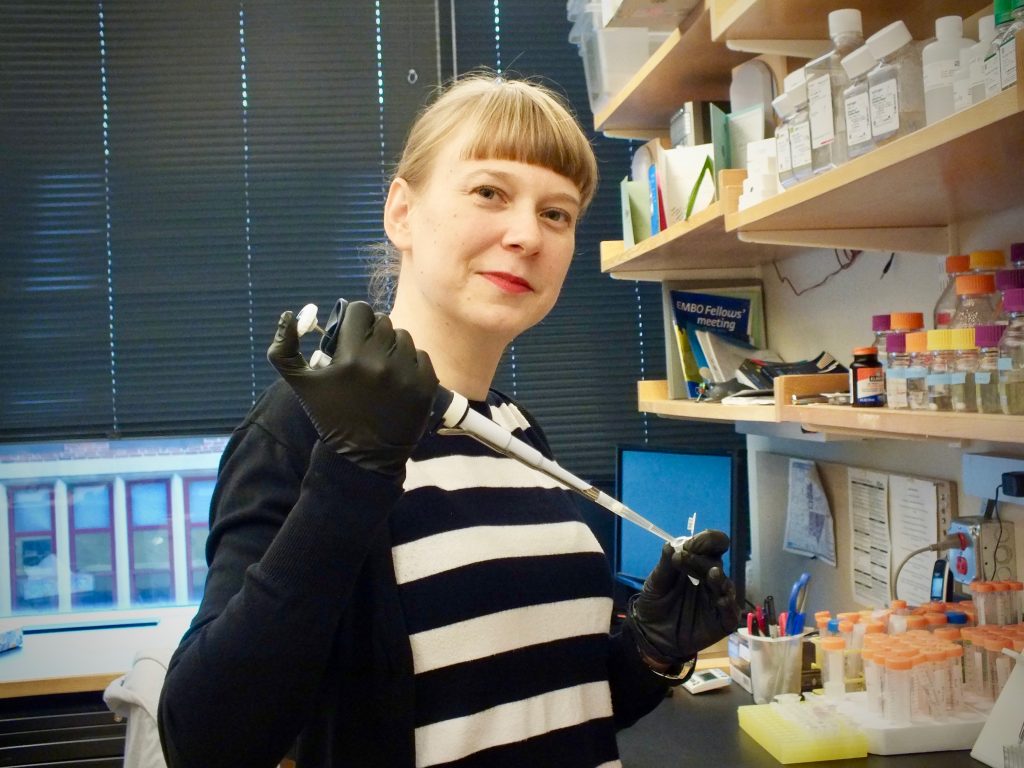 Dr. Eileen Furlong. Dr. Erceg held the position of Postdoctoral Fellow at the European Molecular Biology Laboratory (EMBL) in Heidelberg, Germany and most recently, she was a EMBO Long-Term Postdoctoral Fellow in Dr. C.-ting Wu’s laboratory at the Harvard Medical School. Dr. Erceg brings with her an innovative research vision including studying multi-scale genome organization and gene regulation in multicellular diploid organisms using genomic and single-cell transformative imaging approaches, single-molecule localization and super-resolution microscopy. Her laboratory, which will be housed in the newly completed Engineering and Science Building, will expand her research program to define the fundamental mechanisms guiding parental genome packing and regulation and determine how dysfunctional genome integrity and positioning affect cellular identity in disease and evolution. To this end,