Author: Jessica Williamson

Congrats to ISG’s Research and Mentoring for Postbaccalaureates in Biological Sciences (RaMP) cohort!

Caught in the Act of Evolution

Researchers’ findings could justify greater protections for an Everglades critter.


heir fur might feel the same, but a mink in the Everglades is not the same as a mink from northern Florida, researchers from the University of Connecticut and Central Connecticut State University report in the April 20 issue of Nature Heredity, which also ran a podcast discussing the research. The scientists’ findings could justify greater protections for the Everglades mink.

Mink resemble semi-aquatic ferrets, and are found almost everywhere in North America where there is water except the dry southwest. But in Florida, a state filled with lakes and rivers, mink are found in only three places, and those three are isolated from each other.

“Mink are really difficult to study,” says Paul Hapeman, a conservation biologist at Central Connecticut State University. “They have low detection rates using established methods. Florida Fish and Wildlife had cameras set out for several years and only got a couple of photos. Recent efforts have been a little more successful.”

Hapeman had been studying the mink along with Florida Fish and Wildlife, looking at the genetics of the animals. Past research had tentatively suggested that the mink in the state had diverged into three subspecies in the salty waters along the coasts and seasonally flooded wetlands of south Florida. Mink in the Everglades seemed particularly distinct—and vulnerable. If conservationists could show undeniable genetic differences between the three subspecies, it would go a long way towards supporting protection for them.

The University of Connecticut’s Institute of Systems Genomics (ISG) reached out to Hapeman. They were looking for a project for a team of students, and though Hapeman’s work with mink and genetic novelty could benefit from the collaboration. UConn computational biologist Jill Wegrzyn’s team specializes in decoding complete genomes of threatened organisms.

Mink was an unusual choice for Wegrzyn’s lab, which more commonly focuses on trees or species of ecological concern. Mink, known scientifically as Neogale vison, are considered invasive in Europe, where they have escaped from fur farms and begun breeding in the wild.

And mink already had a reference genome—sequenced from a British mink presumably descended from a farm escapee. Creating another reference genome would be a lot of work.

In fact, Wegrzyn and Hapeman wanted to go further and create a pangenome, fully sequencing the genes of multiple mink from three locations in Florida and one in Louisiana. Such a thorough look would be the best way to make the case that the three groups of mink were genetically distinct. But that kind of effort would require a big team of researchers.

Fortunately Wegrzyn, evolutionary biologist Elizabeth Jockusch, and other scientists at UConn’s ISG had just the thing: funding from the National Science Foundation for a Research and Mentoring for Postbaccalaureates in Biological Sciences (RaMP) cohort.

RaMP grants were intended to give research experience to students who had undergraduate degrees but hadn’t had the chance to do much lab work. Wegrzyn, Jockusch, and their colleagues assembled a team of students for the RaMP cohort. They would be trained in bioinformatics, or how to assemble and analyze a genome, using the mink as their subject. Hapeman provided the students samples from six different minks—two from each of the three tentative N. vison subspecies in Florida and Louisiana. The genome of each mink was compared to the others to see which genes, or families of genes, were missing or different. Their results reinforced what biologists had already suspected: the samples represented three distinct subspecies.

Some of the samples came from Hapeman’s lab during cooperative research with state wildlife agencies in Florida and Louisiana, and some of them came from mink specimens archived at the Florida Museum of Natural History. In the past, archived specimens were often too degraded to get usable DNA. But the students, and newer techniques they trained on, proved that isn’t the case anymore.

“This study also supports the value of natural history collections for conservation genomics,” says Wegrzyn.

Mink from the Everglades (N. vison evergladensis) were genetically distinct from mink from northeastern Florida (N. vison lutensis) and mink from the northwestern Gulf coast (N. vison vulgivaga). Evergladensis mink had genetic differences related to reproduction and sensory systems, which makes sense; Everglades mink breed at a different time of year than other mink, likely due to seasonal flooding in the Everglades. Their genome also indicated a high level of inbreeding, as much as other mammals considered critically endangered, such as white rhinoceroses and lowland gorillas. This suggested a recent decline in their population, possibly associated with an outbreak of canine distemper in the late 1990s.

N. vison vulgivaga had genetic differences related to oxidative stress and adaptability, possibly due to the constantly shifting salinity of their marshy habitat. And N. vison lutensis, found in the tidal estuary of northeastern Florida, had genes enriched for neurological development. Mink of this subspecies also have a noticeably different skull shape. Genetic enrichment of this kind has been linked to learning and behavioral flexibility in other marine mammals such as otters and dolphins.

The team also compared the British mink reference genome to their team’s pangenome, and found the reference mink had genetic changes related to immunity, suggesting farmed mink in Europe are adapting to the overcrowding and disease common on fur farms.

“The approach of using genomic data to assess subspecies classifications has tremendous potential to assist with status assessments and protections,” says Hapeman.

Beyond the scientific findings, the study illustrates the value of the RaMP training model: three of the co-first authors from this cohort – Airianna McGuire, Mary Rutter (current and incoming Ph.D. students, respectively), and Kyle Paist – remain involved in mentoring the current group of RaMP fellows at UConn.


Follow this link for the full article from the UConn Today. 
Genomic Analysis Predicts Guide Dog Success

Guide dogs help thousands of people with visual disabilities navigate daily life.

While guide dogs provide tremendous benefits, the current training program faces serious inefficiencies, since a large percentage never actually assist an owner. Only 60% of dogs evaluated for assistance work graduate from their training programs. This means a loss of more than $12,000 per dog unable to complete training. A dog that has completed the program costs up to $50,000, and people can wait years for a trained animal.

Most dogs that fail to complete guide dog training do so because of behavioral issues. This led Breno Fragomeni, associate professor of animal science in the College of Agriculture, Health and Natural Resources (CAHNR), to conduct an analysis of dogs’ genetics to see if there was a way to better predict which animals would be successful guide dogs.

“If we can tell before they are trained if they [will be successful], that saves a lot of time and a lot of money, and it will also increase the number of guide dogs out there to help people,” Fragomeni says.

This work was published in Genetics Selection Evolution.

Fragomeni looked at 17 traits taken from the International Working Dog Registry’s (IWDR) Behavior Checklist. Trainers working for organizations around the world use this checklist to quantify dogs’ fitness to work as guide dogs.

Fragomeni focused on the traits that are most associated with failure to graduate including jumping on people, biting, and reactivity to strangers or loud noises.

Fragomeni had access to IWDR’s pedigree information, which includes at least three generations, as well as complete genomic sequences for 1,100 Labrador retrievers, the most common breed of guide dog.

Using equations, he correlated this genetic information with the dogs’ performance according to their Behavior Checklist evaluations.

“If I have one dog with many puppies, and I look at the performance of those puppies, that performance would be a good indicator of the genetics of the father,” Fragomeni says.

With genomic data, Fragomeni was able to not only tell if certain parental genetics gave rise to puppies that were more likely to become guide dogs, but if individual animals are more likely to be successful. Fragomeni found that genomic data was a better predictor of a dog’s success for at least 11 of the 17 traits he studied when compared to traditional evaluations.

“If I have genomic data, I don’t need to wait for animals to have progeny to tell if they are going to be good [guide dogs],” Fragomeni says. “Just using genomic data, I can predict how well all those animals will perform.”

This information can inform “breeding values,” numbers IWDR assigns to give breeders a sense of the likelihood that a given dog’s offspring can be successfully trained as guide dogs.

“If we keep selecting them, we’re going to improve that population consistently over time,” Fragomeni says.

One major limitation of this study was the lack of animals with complete genomic data available. While people, including Fragomeni, have been using genomic information to help selectively breed livestock for decades, this was one of the first attempts to use it for guide dogs.

“The paper is very important for that reason, because now we have a working example in that specific population,” Fragomeni says. “It shows the potential of those tools, and we expect those numbers to increase much, much faster.”

While this study was confined to Labrador retrievers, Fragomeni says he plans to expand the work to other common guide dog breeds including German shepherds and golden retrievers. He is also working on a paper evaluating how selecting for one trait, like fear of strangers, could impact others, like harness sensitivity.

Fragomeni is also interested in using this work to predict common health issues within a breed. This could have applications beyond service animals.

“Eventually we want to come up with a way that people can genotype their pets and learn if they’re at a higher or lower risk of developing cancer,” Fragomeni says. “That will change how you treat them throughout their life and if you allow them to breed or not.”

Click to see original article on UConn Today.

Congratulations to Dr. Daniel Bolnick on His Election to the American Academy of Arts and Science

The American Academy of Arts and Sciences (AMACAD) announced that Prof. Daniel Bolnick of the Department of Ecology and Evolutionary Biology is one of its newly-elected members. Prof. Bonick’s research in evolutionary ecology and evolutionary immunology “seeks to understand the evolutionary and ecological rules that promote genetic diversity within species: variation among individuals, and divergence between populations.” Prof. Bolnick is only the 8th member from UConn elected to AMACAD in the last 30 years, and the first since 2022

New Line of Bovine Embryonic Stem Cells Shows Promise for Lab-Grown Meat, Biomedical Applications

Researchers in the College of Agriculture, Health and Natural Resources have developed a novel line of bovine embryonic stem cells, which have significant potential for a variety of new innovations, from lab-grown meat to models for human tissue replacement.

This work, led by Xiuchun “Cindy” Tian, professor of biotechnology in the Department of Animal Science, and her former and current graduate students Yue Su, Jiaxi Liu, and Ruifeng Zhao, was published in Stem Cells.

Click here to read the full article from UConn Today.

Congratulations to Blanka Rogina, M.S., Ph.D.- the New Vice President of the Gerontological Society of America

Banka Rogina, M.S., Ph.D., of the UConn School of Medicine has been newly elected vice president of the Gerontological Society of America (GSA). Rogina will serve a 1-year term in this national leadership position, beginning January 2026.

Following the end of her vice president role, Rogina will assume the role of president of the GSA in 2027 and then chair of its Board of Directors in 2028.

The GSA is the nation’s oldest and largest interdisciplinary organization focused on aging with over 6,600 members from over 50 countries. GSA has six membership groups based on fields of interest including physicians, dentists, basic scientists, nurses, pharmacists, nutritionists, social workers, psychologists, sociologists, epidemiologists, policy makers, among others.

“I am honored to be selected for this prestigious leadership role,” shares Rogina whose tenure with the GSA has been longstanding.


Follow this link for the full UConn Today article.

Tagging Time Travelers

for Fall 2025 newsletter: GAP
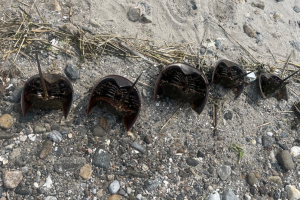
Horseshoe crabs are nicknamed "living fossils" because the species has survived virtually unchanged for millions of years. (Courtesy of Kate Castellano)

Horseshoe crabs hold the world record for surviving the longest without any significant changes to their body structure. Virtually unchanged for over 450 million years, they’ve earned the nickname “living fossils.” Another reason why this species remains so captivating lies in its molecular makeup – horseshoe crab blood is an almost iridescent blue and has been used as a key ingredient in developing vaccines and medicines for over 50 years.  

To keep animal research alive while also preserving the crabs’ population, Castellano and Neitzey collaborated with Sacred Heart University’s Project Limulus, a long-running ecological and conservation study of horseshoe crabs on the Long Island Sound, to help tag horseshoe crabs. Project Limulus Horseshoe Crab Tagging allows researchers to keep track of the populations in New York, Connecticut, Rhode Island, and Massachusetts and compare numbers annually. It also allows scientists who collect samples from the crabs to keep track of their well-being.

This year’s event was held on June 13th and included residents of Sherwood Island State Park in Westport, and volunteers from the UConn Genome Ambassadors Program, with as many as 40 individuals who signed up with Castellano. 

Click here to read full UConn Today article. 


A RaMP Up to Scientific Success

GRFP Fellows Savanna Brown and Hailey Baranowski with their faculty mentor Elizabeth Jockusch
From left: GRFP Fellows Savanna Brown and Hailey Baranowski with their faculty mentor Elizabeth Jockusch, professor in the Department of Ecology & Evolutionary Biology (EEB).

Earlier this year, UConn inducted three graduate students into the National Science Foundation Graduate Research Fellowship Program (NSF GRFP). The NSF GRFP is a highly sought-after opportunity, providing financial support for graduate scientific study.

Besides their can-do attitudes and wicked smarts, the three students shared something in common: they were all participants in UConn’s Research and Mentoring for Postbaccalaureates in Biological Sciences (RaMP) program. 

RaMP is a nationwide initiative funded by the NSF in 2022. UConn’s RaMP program centers on the theme of “Genomic Novelty” — investigating how and why genomes change over time. Its faculty mentors include professors from the Departments of Ecology & Evolutionary Biology; Physiology & Neurobiology; and Molecular & Cell Biology. 

The program’s unique structure allows participants to pursue two major research milestones over the course of a full year: an independent project, advised by graduate student and faculty mentors, and an all-cohort group project which culminates in a summer publication.  

In 2024, the UConn RaMP cohort published the world’s first complete genome sequence of the desert hairy scorpion. This year, they did the same for the Everglades mink, one of the rarest mammals in the United States.

Read more on UConn Today.

UConn Symposium Seeks to Integrate Nutrition with Immune Function to Shape New Disease Treatments

Anthony Vella, professor and Boehringer Ingelheim Chair in Immunology at UConn Health, presents his research in the UConn Health Academic Rotunda
Anthony Vella, professor and Boehringer Ingelheim Chair in Immunology at UConn Health, presents his research in the UConn Health Academic Rotunda on Friday, June 13, 2025. (Lauren Woods)

On Friday, June 13, UConn Health hosted the third biannual Immunology, Metabolism, and Nutritional Sciences Symposium, with researchers presenting and discussing their cutting-edge work in these interconnected fields. 

Anthony Vella, the Boehringer Ingelheim Chair in Immunology at UConn Health, and Ji-Young Lee, head of the UConn Department of Nutritional Sciences, have co-organized the symposium every two years since 2019. The event fuses their two disciplines – the study of the immune system and the science of nutrition – and considers the unique scientific potential that is unlocked at this intersection. 

“You really have to have an integrated understanding of multiple systems,” Vella says. “The immune system engages the metabolic pathways, and everyone knows that metabolism and the immune system are impacted by nutrition. We’re trying to set the stage for integrating these ideas into a better understanding of how to really effectively prompt the immune system to fight disease.” 

Each iteration of the symposium has a distinct focus, says Vella, reflecting trends in scholarship and collaborative efforts between the two schools. In 2019, for instance, the focus was on the gut microbiome; this year, immunology took center stage, riding a wave of recent breakthroughs in the field.

Read more on UConn Today.