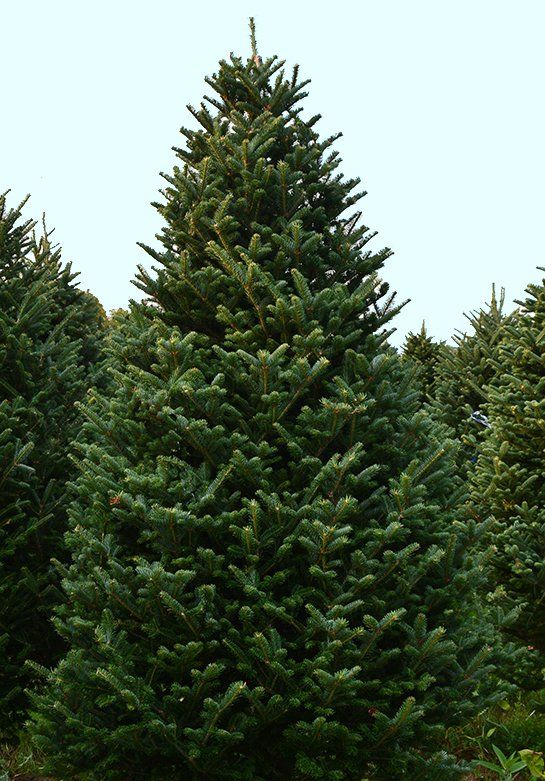

Abies fraseri (Fraser fir) is a narrowly pyramidal evergreen conifer endemic to the high-elevation southern Appalachian Mountains of the eastern United States, reaching 10–15 m tall with soft, dark green, white-banded needles and upright purple cones (1), and is the most commercially valued Christmas tree species in the United States despite being listed as endangered by the IUCN.
The genome assemblies of Abies firma, Abies fraseri, Abies procera, and Abies equi-trojani represent among the first chromosome-scale pangenomic resources within the genus Abies, filling a critical gap in conifer genomics and providing breeders, conservationists, and the Christmas tree industry with molecular markers needed for informed cultivar selection, rootstock improvement, and resistance breeding.
| Common name: | Fraser fir |
| Conservation status: | Endangered (IUCN Red List) |
| Project leads: | Justin Whitehill (NCSU), Ross Whetten (NCSU), Jill Wegrzyn (UConn) |
| Project members: | Vidya Vuruputoor (UConn), Mary Rutter (UConn) |
| Completed: | Sequencing, Assembly |
| In progress: | Annotation, Analysis |
| Funding: | Specialty Crop Research Initiative project award no. 2024-51181-432333, from the U.S. Department of Agriculture's National Institute of Food and Agriculture. |
| References: | (1) Abies fraseri, NC State University. Accessed from plants.ces.ncsu.edu |