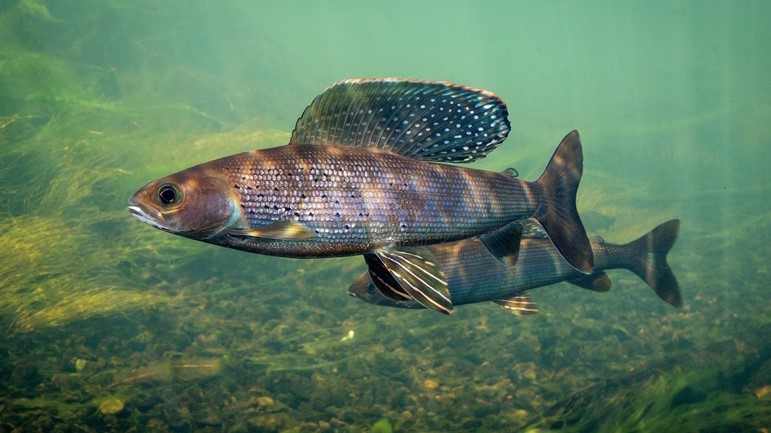
The arctic grayling is a freshwater salmonid found throughout the Arctic, inhabiting cold, clear, medium to large rivers and lakes. As the seasons change, adult grayling will migrate between their overwintering and spawning zones within the watershed (1). Commonly seen in Alaskan streams, they are important for both subsistence and sport fishing (2).
The Arctic is warming four times as fast as the rest of the globe (3). As part of the Evolving Meta-Ecosystems (EvoME) Institute, the goal of this project is to assemble a species-level pangenome of Arctic grayling sampled from north to south of Alaska's Brooks Range, facilitating greater insight into structural variation that may underlie key climate-related adaptations.
| Common name: | Arctic grayling |
| Conservation status: | Least Concern (IUCN Red List) |
| Project leads: | Airianna McGuire (University of Connecticut) |
| Project members: | Airianna McGuire, Brandon Lind, David Baukus, Mary Rutter, Nicole Pauloski, Peter Westley, Erik Schoen, Mark Urban, Rachel O'Neill, Jill Wegrzyn |
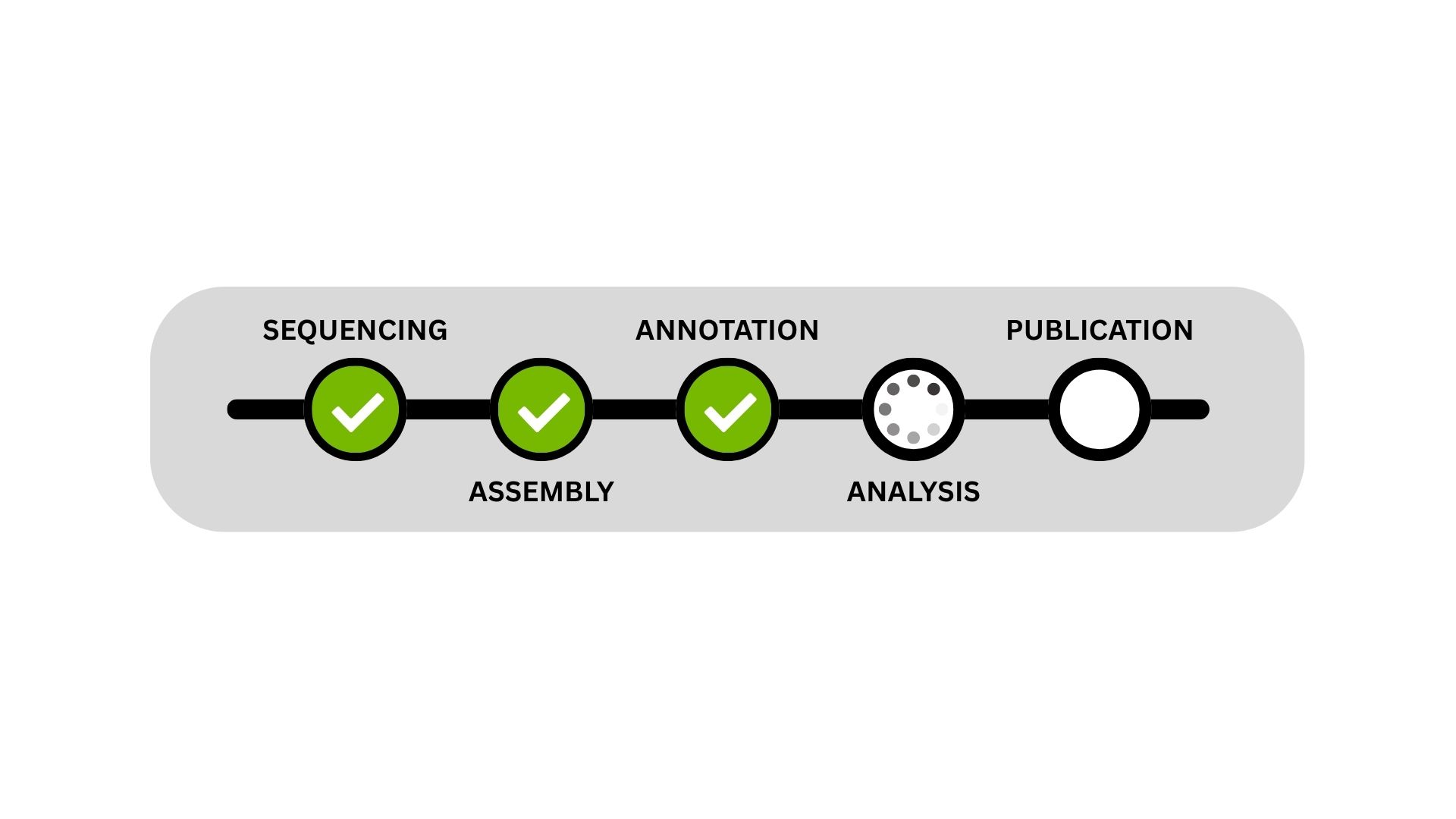
| Completed: | Sequencing, assembly, annotation |
| In progress: | Analysis, publication |
| Funding: | NSF Award #2320675, BII: Evolving Meta-Ecosystems in the Arctic |
| References: | (1) Arctic Grayling, US FWS. Accessed from fws.gov |
| (2) A Field Guide to the Common Fishes of the North Slope of Alaska, Dept. of Wildlife. Accessed from north-slope.org | |
| (3) Rantanen et al. 2022. The Arctic has warmed nearly four times faster than the globe since 1979. Commun Earth Environ 3, 168. https://doi.org/10.1038/s43247-022-00498-3 |